Patina Plumbing
A plumber’s site that answers the price question before the phone rings.
- Client
- None: a concept of our own
- What
- One-page site for a home plumbing company
- We did
- Name, palette, type, copy, 3D pipe, build
Someone with a leak has ten seconds.
Patina is a home plumbing company that doesn’t exist. We made it to show how we build for the trades, so the brief came from the people who call a plumber: someone with water on the floor, or planning to replace old Poly-B pipe before it fails.
Before they pick up the phone they want three answers. Do you do my kind of job? Roughly what will it cost? Do you come to my area? The first two screens answer all three.
Red is the colour of plumbing. We measured it.
We captured four Metro Vancouver plumbers’ sites at desktop and phone size and measured their colours. Under the greys and whites, red leads at 11% of the page, with dark brown and a stock blue behind it.
None of them uses green. That gap became the brand.
Colours measured from eight screenshots of four competitors’ home pages (k-means in OKLab), by share of the page. Their names and screens stay out of our portfolio; the numbers are enough.
Copper turns green in Vancouver’s rain.
Patina is what copper pipe becomes with age: verdigris, the green of the Hotel Vancouver roof. Short, easy to say on the phone, and nothing like the names already in the category.
So the palette came from the trade’s own material. Verdigris leads, on buttons and links. Copper is the rare accent, kept to marks and large numbers. The ground is porcelain, the white of a new fixture.
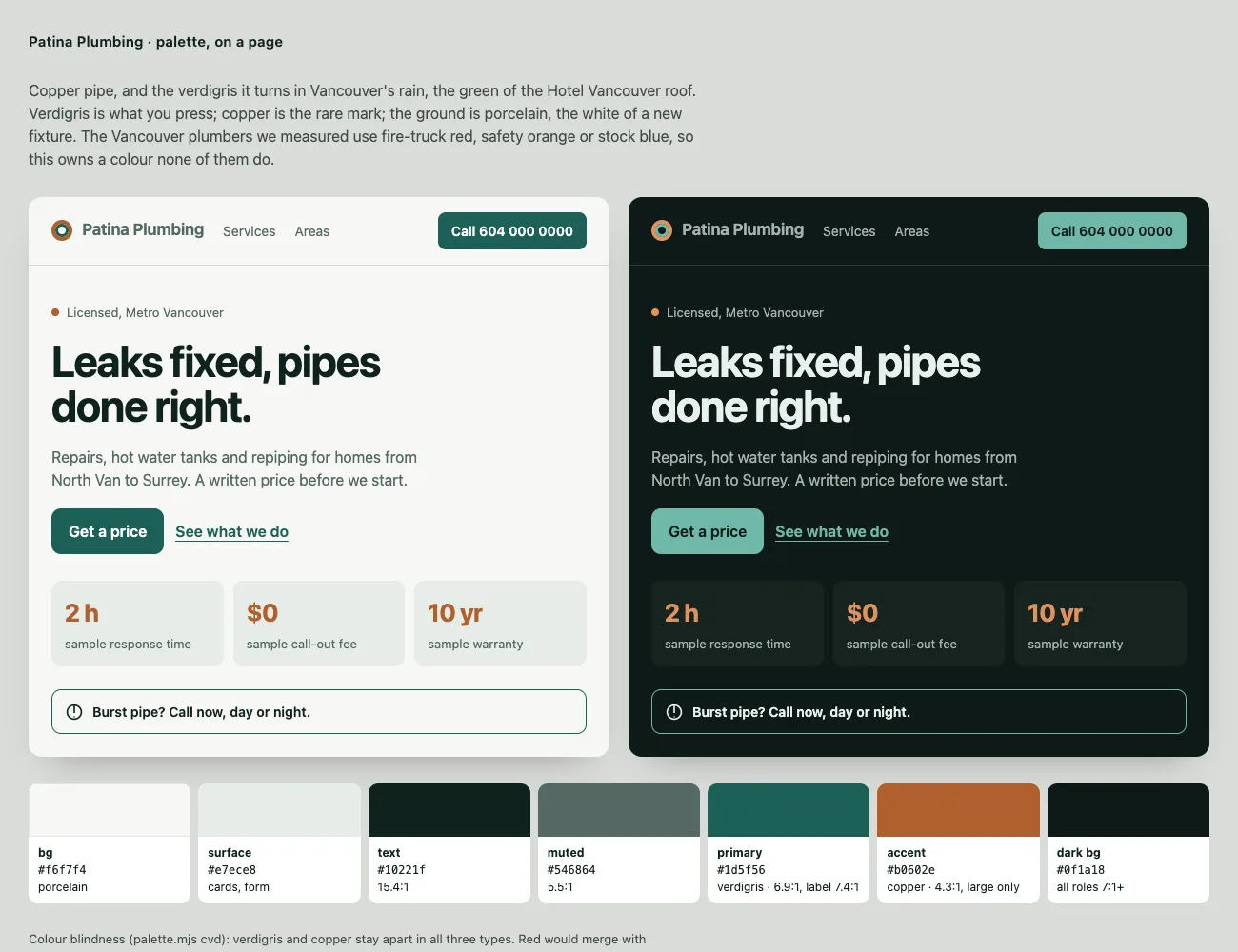
The palette card we work from: every role checked for contrast, in light and dark.
Every section answers one question.
A plumbing site doesn’t need effects. It needs the right facts in the right order, set so they’re easy to find on a phone in a hurry.
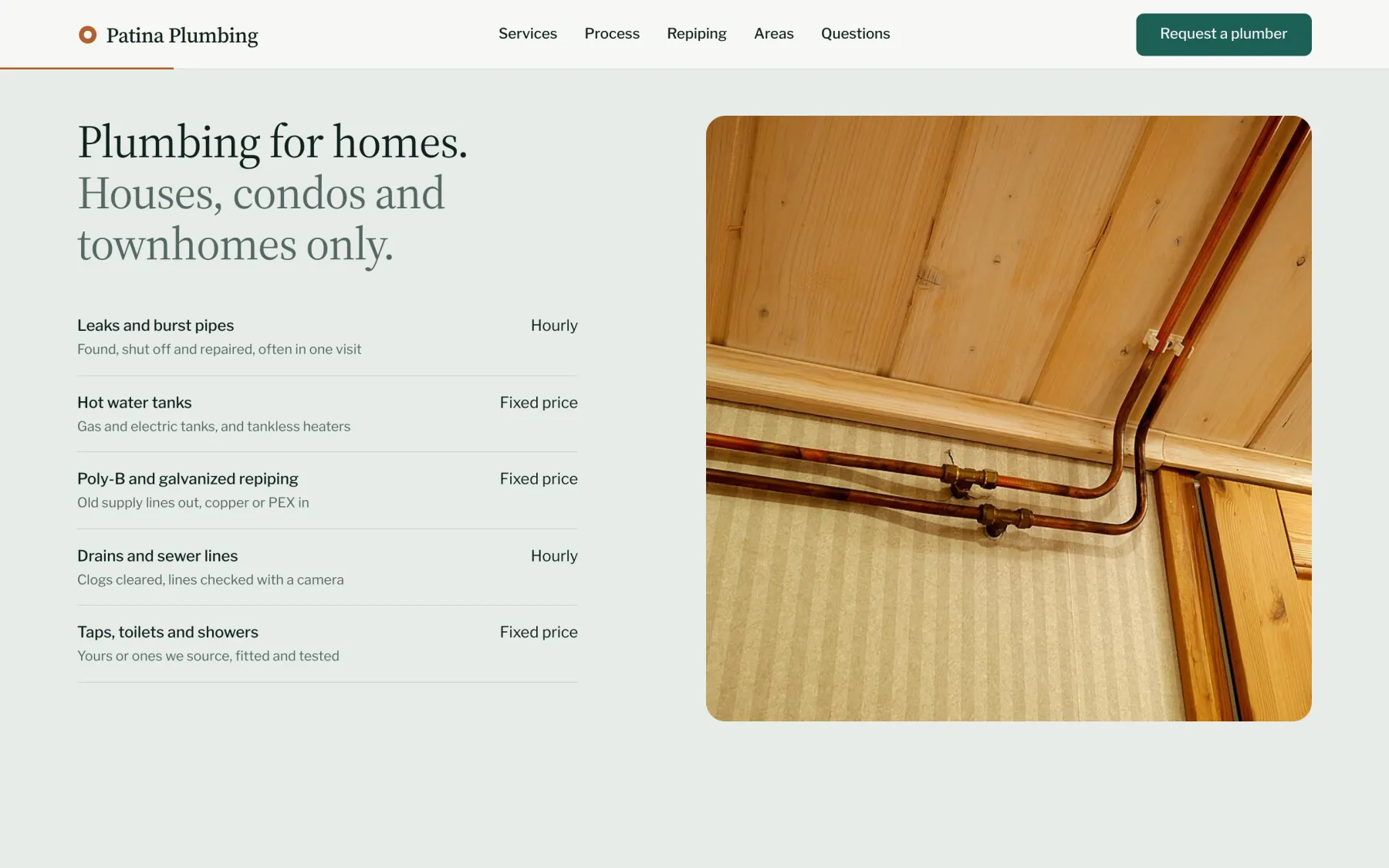
The price question, first
Each job says whether it’s hourly or a fixed price, before anyone calls.
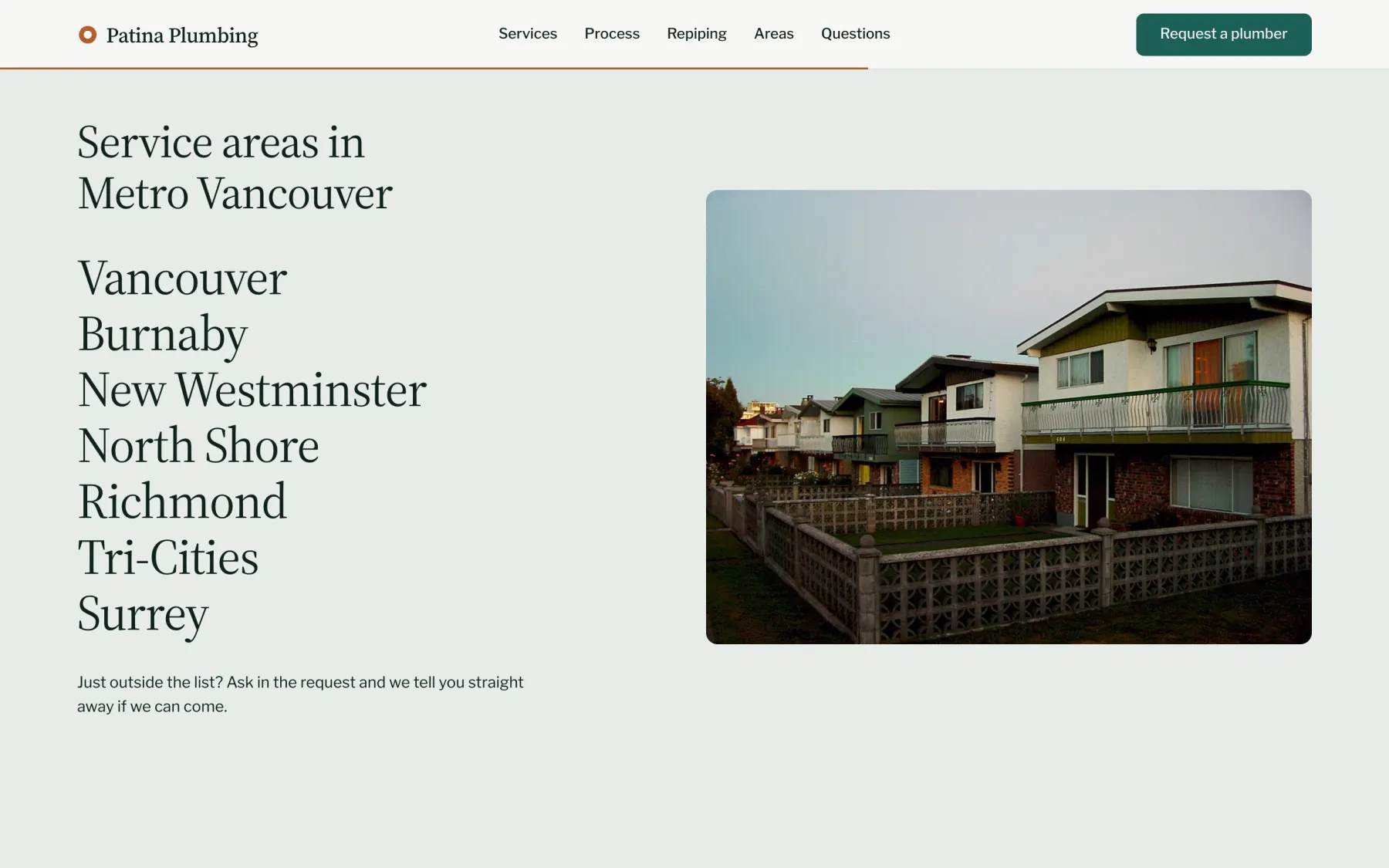
Their city, set large
Seven cities in big type, beside a street of Vancouver Specials: the houses that hold most of the Poly-B.
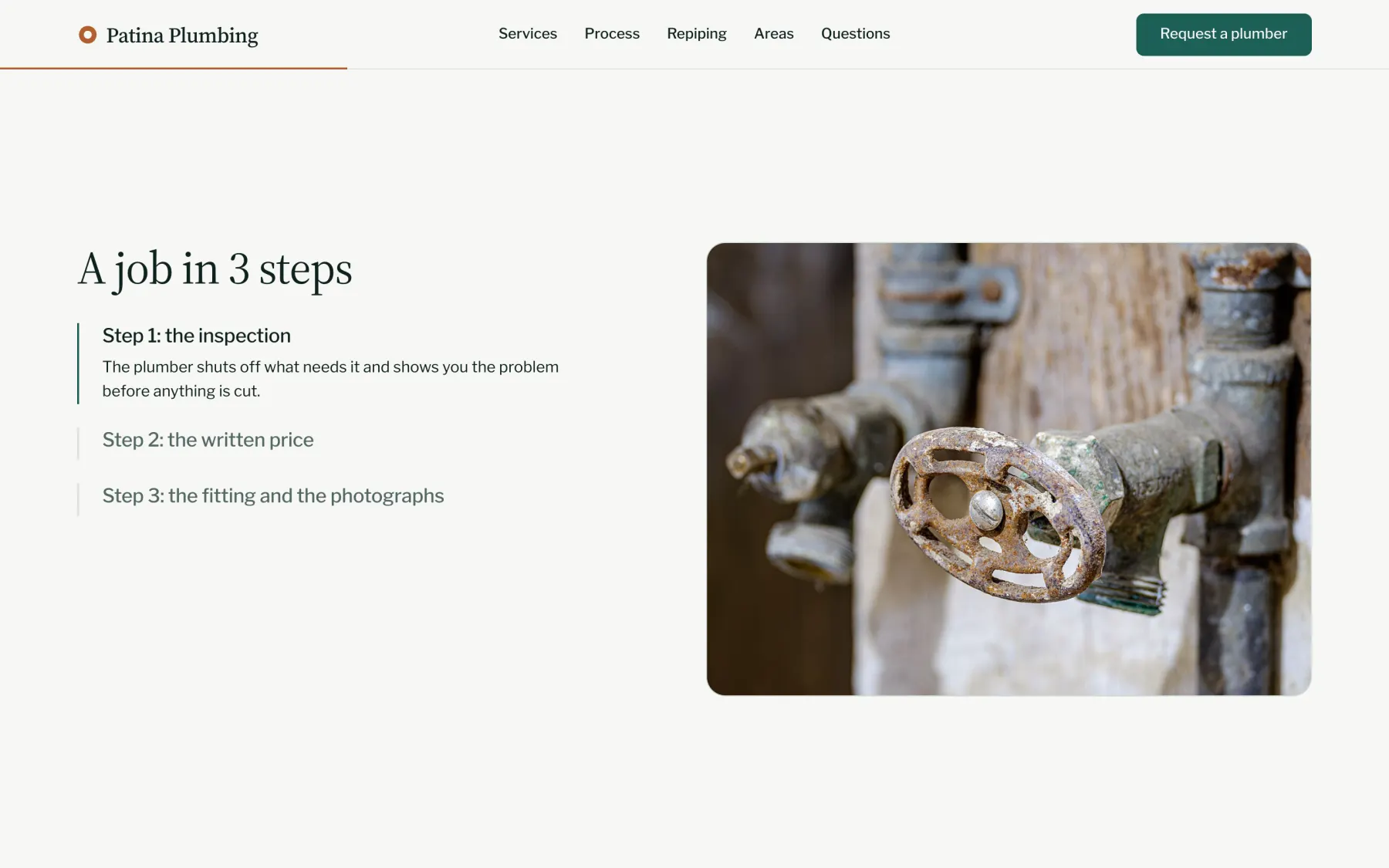
A job in three steps
The inspection, a written price, then the fitting, photographed before a wall closes over it.
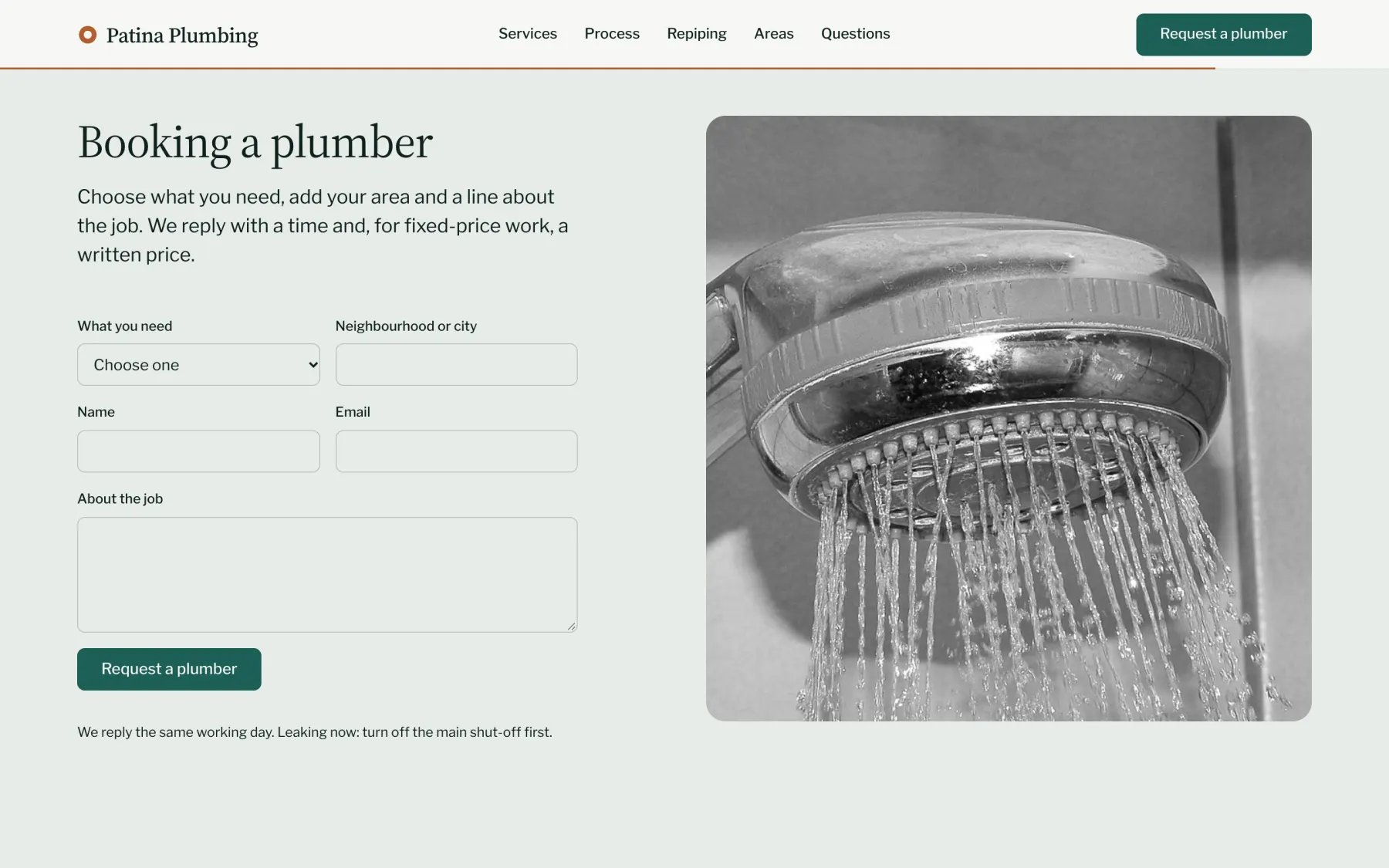
A form that asks only what’s needed
What you need, where, and a line about the job. Then the reply promise, and what to do if it’s leaking now.
It moves only where it helps.
A trade site earns trust by staying calm. The hero photograph drifts a little slower than the page, and a copper line under the menu fills as you read.
At the close, a copper pipe run draws itself from the floor up, its last elbow already gone green. It loads only near the end and only on larger screens. For anyone who has asked their device for less motion, it stands still.
Nothing on it pretends.
A concept is only useful if it’s honest about being one. Everything that would have to be true for a real business is left out, not invented.
- No reviews or star ratingsNot one. A real client’s reviews would go where the questions are.
- No licence number, awards or years in businessThe parts of a trade site people check first, so the parts we never fake.
- No phone number or addressThe request form reaches nobody, and the site tells search engines to ignore it.
- Eight stand-in photographsLicensed from Wikimedia Commons and credited on the site. For a real client, a half-day shoot replaces them: the van, the crew, a finished bathroom.
Light, steady and readable.
Measured on the live site on 13 November 2026, at phone size with the processor slowed four times.
Start with a brief
A brief about your business and what you need. We usually reply within one working day, to the email or phone number you give. Sending one is free and commits you to nothing.